Este site usa cookies para garantir que você obtenha a melhor experiência. Leia mais
Bom Dia Bem-Vindo a Freenote, Login ou Crie sua conta

Bom Dia Bem-Vindo a Freenote, Login ou Crie sua conta

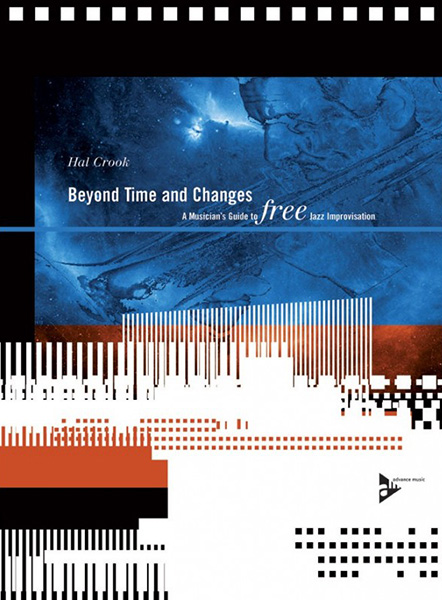
Neste método, o famoso trombonista, pianista, compositor, arranjador, professor e autor, Hal Crook, oferece uma metodologia extremamente avançada ao improvisador que está lidando com o free jazz. Ele mostra ao estudante como preparar os solos e acompanhamentos em harmonias complexas e quebradas, seguindo regras, porém sem tirar a liberdade e interpretação do músico. Há comentários e explicações, além de exemplos musicais concisos, que vão direto ao assunto, exercícios práticos, transcrições de solos e um CD com 17 performances.
Acompanha CD
Advance Music
Sinopse Original:
In Beyond Time and Changes, acclaimed jazz trombonist, pianist, composer, arranger, teacher and author Hal Crook offers a methodology to guide the advancing improviser through the un-chartered musical territory known as free jazz.
Beyond Time and Changes shows improvisers how to prepare for soloing and comping in free settings by exploring the issues of musical accuracy, musicality and continuity (motive development) on form, and then reveals how to create structure and order within free settings by using the known to navigate the unknown.
With the aid of lucid explanations, concise musical examples, practical exercises, solo transcriptions and a compelling demonstration CD featuring 17 performances by the author and a stellar rhythm section, Beyond Time and Changes solves the mystery long associated with how to make free improvisation make sense-without losing your freedom in the process.
By Hal Crook Website:
Beyond Time and Changes offers a methodology to guide the advancing jazz improviser through the un-chartered musical territory known as free jazz.
Beyond Time and Changes explores numerous musical topics, including: motive development, through-composed line, compositional direction, tension/release, continuity, balance, pacing, impact, dimension, self-critique, rhythmic pulse, exercise design, chord transformation, micro and macro views, leading and following, form and free settings, interpreting musical signals, group performance scenarios, melody-guided constant structure, interactive and supportive comping.
Addressing the inherent contradiction in explaining how to play free, Hal writes in Beyond Time and Changes:
"Free improvisation is only as free as the musician doing it. If the goal, then, is to be free while playing free, we must first know and understand what it is we are trying to be free, and play free, from. In other words, we must know and understand form (time and changes), so we can then forget about it-without forgetting it-while we play free.
"Musical improvisation began and evolved as an art form played in time (tempo and meter) and on changes (chord progressions), thereby making form an integral part of its nature. Once acquired, a thorough understanding of the elements of form and the rules that govern them can be used to guide our improvising in free settings, giving us the option (or choice) of creating order or disorder.
"As improvisers, we cannot declare our musical freedom from form if we have never learned it in the first place-only our ignorance. Ignorant of form and the methods used to learn it we get only accident and chance (i.e., disorder); and without a choice, true freedom is impossible. Genuinely free improvisation does not result from (or depend on) our ignorance of method and form-but, rather, our mastery and transcendence of it.
"The path to artistic freedom is paved with method and form; method and form must be used to go beyond method and form; and therefore, a system for learning how to play free-based on observation, analysis, logic and even rules-has definite purpose and value. After all, instructing oneself to improvise without rules is itself a rule."
Beyond Time and Changes shows improvisers how to prepare for soloing and comping in free settings by exploring the issues of musical accuracy, musicality and continuity (motive development) on form, and then reveals how to create structure and order within free settings by using the known to navigate the unknown.
With the aid of lucid explanations, concise musical examples, practical exercises, solo transcriptions, and a compelling demonstration CD featuring 17 performances by the author and a stellar rhythm section, Beyond Time and Changes solves the mystery long associated with how to make free improvisation make sense-without losing your freedom in the process.
Reviews:
"Deep in the mind of this legendary musician, composer and teacher lies profound thoughts and ideas about true creative freedom and how to reach it. Hal's book and CD says it all. Go for it, Hal! I only have a few idols, and you are all of them!"
George Garzone (saxophone)
Professor, Berklee College of Music
Bob Brookmeyer
"Hal Crook's Beyond Time and Changes is the ultimate literature on improvisation. This book will deeply stimulate the artistic approach of the modern, creative musician. The demo CD is proof positive; Hal is the chief of improvisation!"
Frank Mobus (guitar)
Professor, Hoschule f. Musik "Franz Liszt"
Weimar, Germany
"In Beyond Time and Changes, Hal Crook brings back what improvisation is all about: developing ideas and musical interaction. His demonstrations command and convince. This book is a 'must have' for professional musicians, students and educators."
Ed Tomassi (saxophone)
Professor, Berklee College of Music
TABLE OF CONTENTS
Acknowledgments 9
Author's Notes 11
Part 1: Doing It All - The Challenge Of Free Jazz 13
Form And Free 13
Form Then Free 14
Doing It All 15
Consistency And Gigs 16
Imitate - Assimilate - Innovate 17
Form Within The Formless 19
Oh - Ah - Ooo! 20
Part 2: Preparation 21
General Considerations: Accuracy - Musicality - Continuity 21
Terms and Definitions:What We Mean by What We Say 23
Improvise 23
Solo 23
Comp 23
Tempo 23
Meter 23
Time 24
Changes (Also Harmonic Rhythm) 24
Time and Changes 24
Form (Song Form) 25
Harmonic And Non-Harmonic Tones 25
Free 26
Free In Tempo 26
Free In Time 26
Free On Form 26
Rhythmic Pulse 27
Content (What To Play) 28
Execution (How To Play) 28
Phrase 28
Phrasing 30
Micro-View And Macro-View 30
Rest 31
Pacing 32
Motive 33
Multi-Motive Phrase 34
Vocabulary 35
Compositional Direction (Time and Changes, Imitation, Contrast) 36
Thematic Material 37
Continuity 37
Through-Composed (Contrast) 38
Original Motive 39
Motive Development (Imitation) 39
Motive Development Techniques 41
Combining Motive Development Techniques 48
Balance 56
Tension and Release 57
Impact 57
Dimension 58
Constant Structure 59
Melody-Guided Constant Structure Comping 60
Chord Transformation 61
Accuracy 62
Musicality 62
Part 3: Exercises 63
Exercise Design 64
Selecting Topics to Practice 64
Creating Performance Instructions 65
Forming Musical Contexts (Form And Free Settings) 67
Example Exercises 68
Self-Critique 70
Improvising On Form 70
Improvising In Free Settings 72
Satisfaction and Dissatisfaction 72
Improvisation Exercises 74
Through-Composed (Contrast) 74
Motive Development (Imitation) 78
Compositional Direction (Time and Changes, Imitation, Contrast) 82
Rhythmic Pulse 85
Supportive and Interactive Comping 87
Pacing 88
Part 4: Perfomance Scenarios 91
Performance Instructions For Motive Development 92
Create the Theme 92
Establish the Theme 92
Embellish the Theme 93
Recapitulate the Theme 93
Controlling the Process of Development 94
Changing The Compositional Direction (Time and Changes, Imitation, Contrast) 94
Comping Considerations (Also For Soloists) 95
Supportive and Interactive Comping 95
Interpreting Musical Signals 97
Pacing (Playing and Resting) 98
The Advancing Accompanist 98
Topics to Balance 101
Practicing On Form And In Free Settings 102
Form 102
Free 102
Contents
6
Beyond Time and Changes
Suggested Tune List For Performance Scenarios #1-8 On Form 103
Performance Scenarios #1-8: Form And Free Settings 104
1. Soloist Trades With Accompaniment 104
Trombone Solo Transcription 105
2. Developed Solo With Standard Accompaniment 111
Trombone Solo Transcription (Free) 112
Trombone Solo Transcription (Form) 113
Piano Solo Transcription (Form) 114
3. Through-Composed Solo, Standard Accompaniment 115
Trombone Solo Transcription 116
4. Through-Composed Solo With Developed Accompaniment 117
5. Double Theme Solo With Standard Accompaniment 118
Trombone Solo Transcription 119
Bass Solo Transcription 120
Drums Solo Transcription 121
6. Simultaneous Through-Composed Solos 122
7. Simultaneous Developed Solos 122
8. Form - Free On Form - Free 123
Trombone Solo Transcription 124
Performance Scenarios #9-15: Free Settings Only 128
Free Settings 128
Free Scenario Design 128
Summary System 128
Leading And Following 129
Playing With And Without A Leader 130
9. Player Leads, Band Follows (#1) 131
10. Player Leads, Band Follows (#2) 131
11. Player Leads, Player Follows (#1) 132
12. Player Leads, Player Follows (#2) 132
13. Bands Within A Band (#1) 133
14. Bands Within A Band (#2) 133
15. Bands Within A Band (#3) 134
Combining Performance Scenarios In Free Settings 134
Part 5: Demonstration CD 137
CD Tracks And Contents 137
About The Recording Session 138
About The Demonstration Performances 139
About The Players 149
Books 150
Recordings 153
Reviews 154